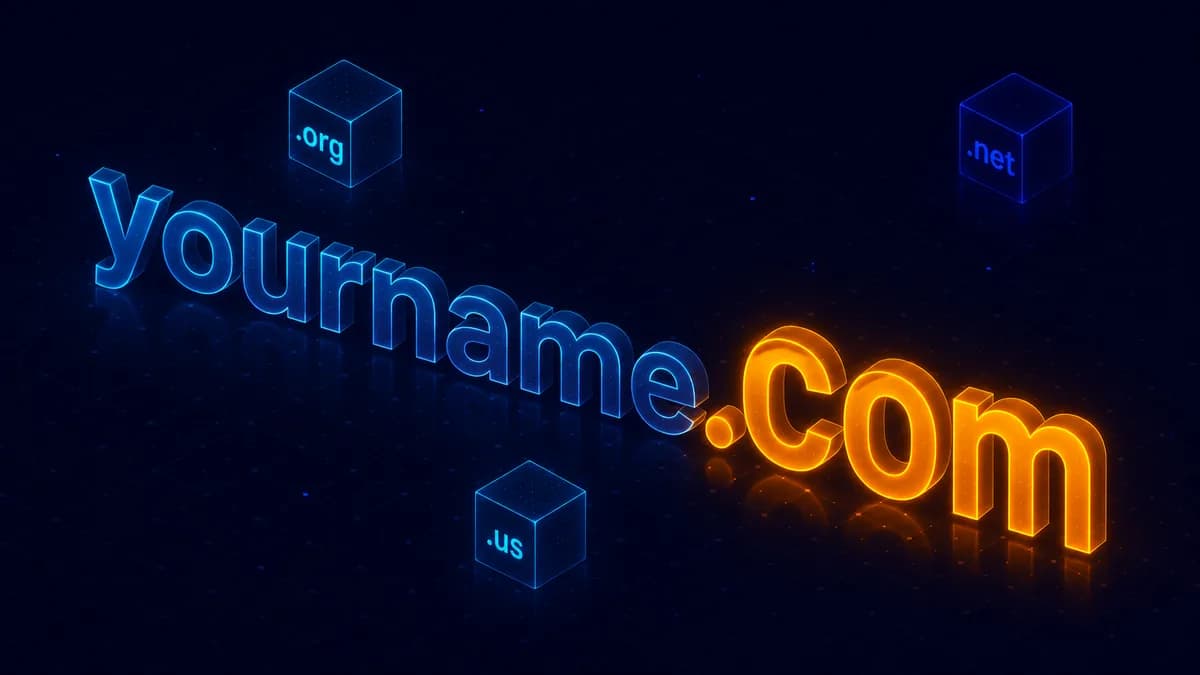
A TLD (Top-Level Domain) is the last part of any web address — the .com in acme.com, the .org in wikipedia.org, the .us in nasa.us. Every website on the public internet has one. Some are 40 years old, some are brand new, and the choice affects how users perceive your site.
Plain-English guide.
The anatomy of a domain
Take mail.google.com:
com→ TLD (Top-Level Domain)google→ second-level domain (the brand part — what most people call "the domain")mail→ subdomain (a slice of google's domain)
Reading right-to-left, you go from the most general ("anywhere ending in .com") to the most specific ("the mail server within google's portion of .com").
The 3 categories of TLDs
1. gTLDs (generic TLDs)
The original TLDs from the 1980s. Open to anyone, no restrictions:
.com— commercial (1985).org— organizations (1985).net— networks (1985).info— information (2001).biz— businesses (2001)
These are operated by big registries: Verisign (.com, .net), PIR (.org), Afilias (.info, .biz). Wholesale prices range from $7 to $15/year.
2. ccTLDs (country-code TLDs)
Two-letter codes assigned to countries by ISO:
.us— United States.uk— United Kingdom (and.co.uk).in— India (and.co.in).de— Germany.cn— China.jp— Japan
Each country sets its own rules. Some are open to anyone (.io, .co), some require local presence (.us, .uk, .ca for some categories).
3. New gTLDs (post-2013 expansion)
ICANN expanded the TLD namespace in 2013. Hundreds of new TLDs launched:
.app— apps (Google-operated, HTTPS-required).dev— developers (Google-operated).shop— e-commerce.io— originally British Indian Ocean Territory ccTLD, became startup-default.tech,.online,.store,.blog, etc.
Wholesale prices vary wildly ($5 to $200/year). Some are aggressively marketed; some are dead.
Who controls TLDs
The hierarchy:
- ICANN (Internet Corporation for Assigned Names and Numbers) — the nonprofit that coordinates the global DNS. Approves new TLDs, sets policy, accredits registrars.
- Registries — operate one or more TLDs. Verisign runs
.comand.net. PIR runs.org. Neustar (now GoDaddy Registry) runs.us. Each registry pays ICANN a fee per registration and sets the wholesale price. - Registrars — companies that retail domains to end users. Pay registries the wholesale price, add markup, sell to you. There are ~2,500 ICANN-accredited registrars worldwide; REXO HOST is one (via partnership with an upstream).
- You — the registrant. You don't "own" the domain in a legal sense; you have a year-long lease that auto-renews if you pay.
How TLD pricing works
Each registry sets a wholesale price (the "registry fee"):
.comwholesale 2026: $10.26/year (set by Verisign, increases ~7%/year).orgwholesale 2026: $11.85/year (set by PIR).netwholesale 2026: $10.91/year (Verisign).uswholesale 2026: $7.50/year (Neustar/GoDaddy Registry)
Your registrar pays this floor. Their retail price is wholesale + markup. The markup funds the registrar's operations, support, and profit. At REXO HOST we keep markup thin (~₹100-₹150 per domain) and don't sell add-ons to fund the rest.
Choosing a TLD
Decision tree:
- Default to .com if you're building anything commercial. It's what visitors type by muscle memory.
- Pick .org if you're a nonprofit, open-source project, or community site.
- Pick .net if you're an infrastructure/network/dev-tools brand.
- Pick .us if you're a US-only business and the geo-signal matters.
- Pick a new TLD (
.io,.dev,.app) if you're targeting a tech audience and the .com is taken.
Detailed guidance: .com vs .net vs .org vs .us — the honest decision tree.
Frequently asked questions
Does Google rank .com higher than other TLDs?
No. Google has stated repeatedly that gTLDs (.com, .net, .org, .info) carry equal SEO weight. ccTLDs (.us, .uk, .in) get geo-targeting hints. New gTLDs (.app, .dev) are also treated equally. What matters is content, backlinks, and whether your TLD matches user intent.
What's the difference between a TLD and an extension?
Same thing. "Extension" is the casual term; "TLD" is the technical term. Both refer to the .com / .org / .net at the end.
Can a TLD disappear?
Theoretically yes. ICANN can terminate registry contracts for non-compliance. In practice it's rare; the only memorable case is .cf (Central African Republic) which had its registry suspended in 2023, leaving thousands of domains in limbo.
Are second-level TLDs (.co.in, .co.uk) different from regular TLDs?
They behave the same way — you register yourname.co.uk exactly like you'd register yourname.com. The .co.uk portion is technically two parts but functions as one TLD for registration purposes.
Can I create my own TLD?
Yes — ICANN runs application rounds. The 2012 round cost $185,000 per TLD application. The 2026 round (approved, launching 2027) will cost ~$220,000. Mostly used by big brands (.google, .apple, .microsoft) for vanity TLDs.
Pick a TLD now
Search across all major TLDs at REXO HOST — your name with .com / .net / .org / .us all shown side-by-side with prices. Pick on brand fit; we make the math easy.
Keep reading
What is Domain Squatting? How to Protect Your Brand
The different types of squatting (cyber, typo, brand-jacking), real-world examples, and your legal options if it happens to you.

What is an SSL Certificate (And Do You Need One)?
Plain-English guide to HTTPS, SSL/TLS certificates, and why every site in 2026 needs one — usually for free.
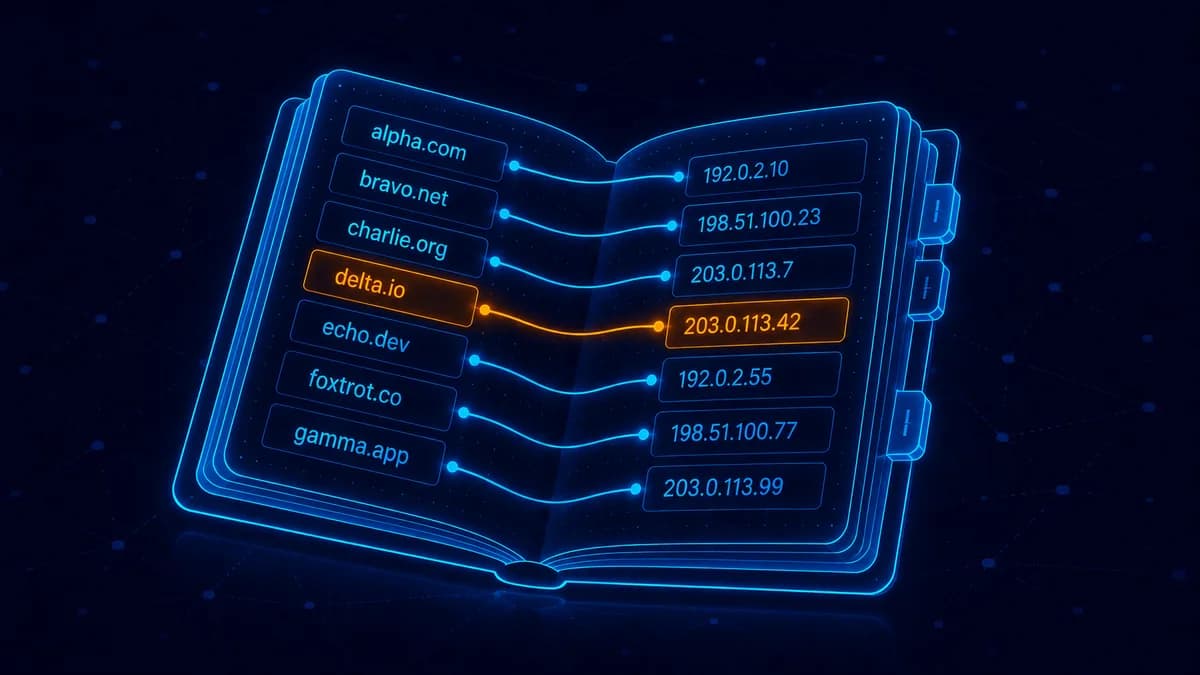
What is DNS? Explained for Non-Technical Founders
DNS is the address book of the internet. Plain-English guide to A records, MX records, nameservers, and what each one does.